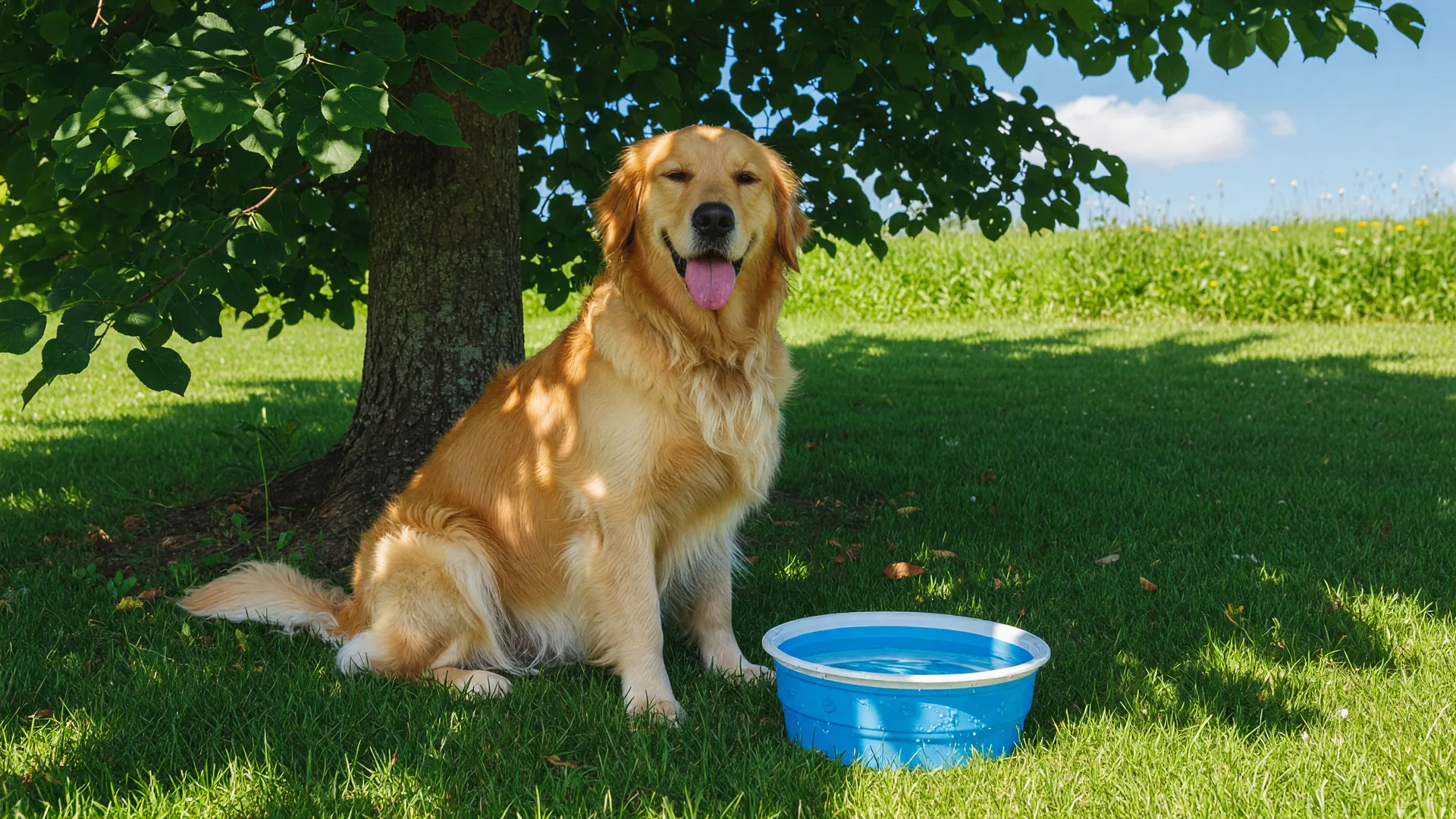
Keeping Your Dog Safe During Extreme Heat
Summer in Northern Virginia is gorgeous — but when temperatures climb into the 90s and beyond, the heat can be genuinely dangerous for our dogs. Unlike us, they can't shed their fur coat, grab a cold drink from the fridge, or crank up the A/C. It's up to us to keep them safe. Here's everything you need to know to protect your pup during heat waves and hot summer days.
How Dogs Regulate Body Temperature (And Why They're Vulnerable)
Here's something most dog owners don't realize: dogs don't sweat the way we do. Humans have sweat glands all over our bodies, which is why a brisk walk or a hot day leaves us dripping. Dogs, on the other hand, have sweat glands primarily on their paw pads — useful for traction, but not much help cooling down.
So how do dogs beat the heat? Panting. When a dog pants, moisture evaporates from their tongue, nasal passages, and the lining of their lungs, which circulates cooler air through their body. It's effective — up to a point. When the air temperature is already hot and humid, panting loses its efficiency because there's no temperature difference to exploit. That's when trouble starts.
A dog's normal body temperature hovers between 101°F and 102.5°F. Heatstroke begins when their core temperature rises just 4 degrees above normal — to around 105°F or higher. At that point, organ damage can begin within minutes. The takeaway? Dogs have a narrow margin for error in hot weather, and it's our job to watch for the signs before they cross that threshold.
Signs of Heat Exhaustion and Heatstroke in Dogs
Heat-related illness progresses in stages, and catching it early can save your dog's life. Here's what to watch for:
🟡 Early Warning Signs (Heat Stress)
- Heavy, rapid panting that doesn't slow down
- Excessive drooling or thick, ropey saliva
- Seeking shade or trying to lie on cool surfaces
- Restlessness or reluctance to keep walking
- Bright red gums and tongue
🔴 Emergency Signs (Heatstroke — Call the Vet Immediately)
- Vomiting or diarrhea (possibly with blood)
- Stumbling, wobbliness, or inability to stand
- Gums turning pale, gray, blue, or brick red
- Disorientation or confusion
- Seizures or collapse
- Loss of consciousness
"Heatstroke is a true medical emergency. Every minute counts — move your dog to shade, start cooling them with lukewarm water, and get to a vet immediately."
If you suspect heatstroke: Move your dog to shade or air conditioning immediately. Apply cool (not ice-cold) water to their neck, armpits, and paw pads. Offer small sips of cool water. Place a fan nearby to aid evaporative cooling. And get to an emergency vet right away — even if your dog seems to recover, internal organ damage can be delayed and life-threatening.
Paw Protection: Is the Pavement Too Hot?
It's one of the most common summer injuries we see: burned paw pads from hot pavement. Asphalt and concrete absorb and retain heat far longer than you'd think. On a 90°F day, asphalt surface temperatures can exceed 140°F — hot enough to cook an egg, and more than hot enough to cause second-degree burns on a dog's paw pads in seconds.
Here's the simplest rule of thumb: The 7-Second Test. Place the back of your hand on the pavement and hold it there. If you can't keep it for 7 seconds, it's too hot for your dog's paws.
🐾 Quick Pavement Temperature Guide
- Below 77°F air temp: Pavement is generally safe for walks.
- 77–86°F air temp: Pavement may reach 100–125°F. Use the 7-second test and keep walks short.
- Above 86°F air temp: Pavement can exceed 130–150°F. Walk only on grass, dirt, or shaded paths — or skip the walk entirely.
Protective options: Dog booties (like Ruffwear Grip Trex or Muttluks) create a barrier between paws and hot surfaces. They take some getting used to, but most dogs adapt within a few short walks. Paw wax (like Musher's Secret) offers a lighter layer of protection for moderate heat. And of course, stick to grassy parks, shaded trails, and dirt paths whenever possible — many of our favorite NOVA dog parks have plenty of grass and tree cover.
Hydration Tips and Portable Water Solutions
Water is your dog's best defense against the heat. Dogs need roughly 1 ounce of water per pound of body weight per day — and that number goes up significantly during hot weather or exercise. A 60-pound dog that normally drinks 60 ounces a day might need 80–100 ounces when it's hot out.
- Always carry water on walks. A collapsible silicone bowl and a 20 oz water bottle take up almost no space in a bag or clipped to a belt loop. Popular options include the Ruffwear Quencher (collapsible) and the Highwave AutoDogMug (squeeze-to-drink from the bottle itself).
- Offer water frequently — don't wait for them to ask. Dogs won't always signal they're thirsty. Offer water every 15–20 minutes on a hot-day walk, even if your dog seems fine.
- Add ice cubes to their water bowl at home. Frozen broth cubes (use low-sodium, onion-free broth) are an extra treat that encourages drinking.
- Keep a bowl of fresh water in multiple rooms and in the yard. Refresh it at least twice a day — water left in the sun gets warm fast and dogs won't want it.
- Frozen treats count toward hydration. Freeze plain yogurt, peanut butter (xylitol-free!), or blended watermelon in a Kong or ice cube tray for a cooling snack that doubles as a water source.
Shaded Rest Breaks: Build Them Into Every Outing
Even the fittest, most heat-tolerant dog needs breaks. When you're out on a hot day, plan your route around shade — not just your destination. Map out spots where your dog can rest out of direct sun for a few minutes. On the trails in Prince William County or the W&OD Trail, tree cover comes and goes, so keep an eye on the path ahead.
A good rule: stop for a shade break every 15–20 minutes on days above 85°F. Let your dog lie down on cool grass if possible, offer water, and check their gums. If they're panting heavily and don't settle down within a couple of minutes, it's time to head home.
Dog-friendly patios with umbrellas and misters are perfect for this — many of the restaurants and breweries in our NOVA guide have shaded outdoor seating where your pup can cool off while you grab a drink.
Breed-Specific Concerns: Brachycephalic Dogs at Extra Risk
If you have a flat-faced breed — Pugs, French Bulldogs, English Bulldogs, Boston Terriers, Shih Tzus, Boxers — this section is especially for you. These breeds are disproportionately affected by heat, and the research is sobering: one study found that Bulldogs are 14 times more likely to develop heatstroke than Labrador Retrievers.
The reason is anatomy. Brachycephalic dogs have narrow nostrils, elongated soft palates, and compressed airways that make panting — their primary cooling mechanism — far less efficient. They can begin overheating at temperatures as low as 70°F, a temperature that feels perfectly pleasant to most people.
⚠️ Extra Precautions for Brachycephalic Breeds
- Limit outdoor time above 75°F. Even with shade and water, these breeds overheat fast. Keep outings short and early.
- Never exercise them midday. Morning and evening only — and keep the intensity low.
- Watch for noisy breathing. If your flat-faced dog sounds like they're snoring or wheezing more than usual during warm weather, they're already struggling to cool down.
- Consider a cooling vest. Brachycephalic breeds benefit enormously from evaporative cooling gear since their built-in system is compromised.
Other high-risk groups include senior dogs, overweight dogs, dogs with thick double coats (like Huskies and Golden Retrievers), and dogs with heart or respiratory conditions. When in doubt, err on the side of caution.
Never Leave Your Dog in a Parked Car
This one deserves its own section because it can't be said enough: never, ever leave your dog in a parked car — not even for "just a minute."
The numbers are stark. On an 85°F day, the interior of a car can reach 119°F within 30 minutes, even with the windows cracked. Studies have shown that cracking the windows makes virtually no measurable difference in the rate of temperature rise. A car is essentially a greenhouse — sunlight enters, heat builds, and there's no ventilation to release it.
Dogs can suffer irreversible brain damage or die when their body temperature reaches 107°F. This can happen in a hot car in as little as 15 minutes.
In Virginia, it is legal for Good Samaritans to break a car window to rescue a pet in distress under certain conditions (Virginia Code § 3.2-6201), and animal cruelty charges can apply to owners who leave animals in dangerous conditions. The safest option is simple: leave your dog at home when you're running errands on hot days.
Water Safety and Pool Precautions
Swimming is a fantastic way for dogs to cool off — but not every dog is a natural swimmer, and even strong swimmers can get into trouble. Here's what to keep in mind:
- Life jackets save lives. Even dogs that love the water should wear a canine life vest with a handle on the back. It's especially important in open water (lakes, rivers, the Potomac) where currents, depth, and underwater hazards are unpredictable.
- Pool safety matters. If you have a backyard pool, make sure your dog knows where the exit is. Teach them to use the pool steps — not every dog knows to look for them. A pool fence or alarm adds a layer of protection when you're not watching.
- Rinse off after swimming. Chlorine, salt water, and lake bacteria can irritate skin and fur. A quick rinse with fresh water after every swim keeps your dog comfortable.
- Watch for water intoxication. Dogs that enthusiastically fetch toys from the water or splash and gulp while playing can ingest dangerous amounts of water. Symptoms include vomiting, lethargy, bloating, and coordination loss. Limit fetch sessions and take frequent breaks.
- Beware of blue-green algae. This toxic algae bloom can appear in ponds and lakes during warm months and is deadly to dogs. If the water looks greenish, murky, or has a foamy scum on the surface, keep your dog out.
Early Morning vs. Evening Walks: When Is It Safest?
Timing is everything when it comes to hot-weather walks. The general rule: before 8 a.m. or after 7 p.m. — but that can shift depending on the day's forecast.
Here's how to think about it:
- Early morning (before 8 a.m.) is best. Pavement has had all night to cool down, temperatures are at their lowest, and your dog gets exercise before the heat builds. In Northern Virginia's summer, sunrise is around 6 a.m. — that's your golden window.
- Evening (after 7 p.m.) is your second window. The sun is lower, pavement has started to cool, and temperatures begin their descent. It's a solid option if mornings don't work for your schedule.
- Avoid 10 a.m. to 5 p.m. This is peak heat. On 90°F+ days, pavement temperatures during these hours can be dangerous even in shaded areas. Stick to indoor play, puzzle toys, or training exercises instead.
On especially brutal days — when the National Weather Service issues a Heat Advisory or Excessive Heat Warning — consider skipping the walk entirely. An indoor game of hide-and-seek, a training session, or a frozen Kong will tire your dog out without the heat risk. A skipped walk is always better than a heat-related emergency.
Cooling Products and Gear That Actually Work
The pet market is full of summer cooling products. Here are the ones that are actually worth your money, based on vet recommendations and real-world testing:
🦺 Cooling Vests
Soak the vest in water, wring it out, and put it on your dog. The evaporative cooling effect works like a dog-sized swamp cooler. The Ruffwear Swamp Cooler is a top pick — it reflects solar radiation, holds moisture against the body, and is built for active use. The lighter Ruffwear Jet Stream is great for high-output activities like hiking.
🛏️ Cooling Mats
Pressure-activated gel mats stay cool without refrigeration. Your dog lies down and the mat activates. Great for car rides, crates, and porch lounging. Look for non-toxic gel and puncture-resistant surfaces.
🛏️ Elevated Cots
Raised mesh beds (like the Kuranda or Coolaroo) allow air to circulate underneath your dog, keeping them cooler than lying directly on hot ground or pavement. Perfect for patios, decks, and camping.
💧 Portable Water Solutions
A collapsible bowl and a dedicated water bottle should live in your car, your bag, and by the door. The Highwave AutoDogMug lets your dog drink straight from a squeeze bottle — no bowl needed. Freeze the bottle overnight for ice-cold water on your morning walk.
DIY cooling hacks: Fill a kiddie pool with a few inches of water for your dog to splash in. Wrap a frozen towel around your dog's neck. Put ice cubes in their water bowl. Freeze a damp bandana and tie it loosely around their neck. These simple tricks cost almost nothing and make a big difference.
Preventative Care Tips for Summer
A little preparation goes a long way. Before the hottest months hit, here's what you can do to set your dog up for a safe summer:
- Keep your dog at a healthy weight. Overweight dogs are at significantly higher risk for heat-related illness. Extra body fat acts as insulation, making it harder for them to release heat.
- Groom appropriately — but don't shave double-coated breeds. That thick undercoat actually insulates against heat as well as cold. Instead, brush out dead undercoat regularly to improve airflow. A professional groomer can tidy up without removing the coat's natural protection.
- Acclimate gradually. If your dog has been indoors all winter, don't start with a 45-minute midday hike in July. Build up their heat tolerance with short, early-morning outings over the course of a week or two.
- Check your yard for hot surfaces. Decks, metal equipment, and dark mulch can all burn paws. Consider a shaded rest area with a cooling mat or a small wading pool.
- Talk to your vet about your dog's individual risk. Dogs with laryngeal paralysis, heart disease, respiratory issues, or prior heat-related incidents need extra caution. Your vet can help you make a summer safety plan.
When to Call the Vet
Some situations always warrant a call to the vet — don't wait and see. Contact your veterinarian or emergency animal hospital immediately if your dog:
- Has a rectal temperature above 104°F (normal is 101–102.5°F)
- Is vomiting, diarrhea, or has bloody stool after heat exposure
- Is stumbling, disoriented, or unresponsive
- Has seizures or collapses
- Shows any of the emergency heatstroke signs listed above
Even if your dog seems to recover after cooling down, veterinary evaluation is essential. Heatstroke can cause delayed organ damage — kidney failure, liver damage, clotting disorders, and neurological issues — that isn't visible from the outside. Blood work and monitoring can catch these problems early.
Emergency Vet Contacts in Northern Virginia:
If your regular vet is closed, these emergency clinics are available:
VRA (Veterinary Referral Associates): (703) 361-3300 — Gaithersburg, MD (serves NOVA)
VC urgent care / VCA Animal Referral: Check vcahospitals.com for your nearest location
ASPCA Poison Control: (888) 426-4435
Summer Should Be Fun — For Both of You
Hot weather doesn't mean you and your dog have to hibernate all summer. With a few smart adjustments — earlier walks, plenty of water, paw protection, and awareness of the warning signs — you can enjoy everything Northern Virginia has to offer with your four-legged best friend right by your side.
The most important things to remember: never leave your dog in a car, check the pavement before you walk, carry water everywhere, know the signs of heatstroke, and when in doubt, stay home and play inside. Your dog relies on you to be their thermostat, their lookout, and their advocate. You've got this.
Stay cool out there, NOVA dog fam! 🐕🦺💧☀️

GG Sfreddo
Associate Broker, eXp Realty · Creator of Dog-Friendly NOVA
GG is a lifelong dog lover and Associate Broker with eXp Realty in Northern Virginia. She created Dog-Friendly NOVA to help fellow pet owners discover the best dog-friendly spots in the region.